
Concrete Countertops: A Durable Granite Alternative
Concrete and granite both work in an outdoor kitchen, but they aren't the same. Here's how they compare on upkeep, heat, stains, and design so you can pick the right one for your patio.
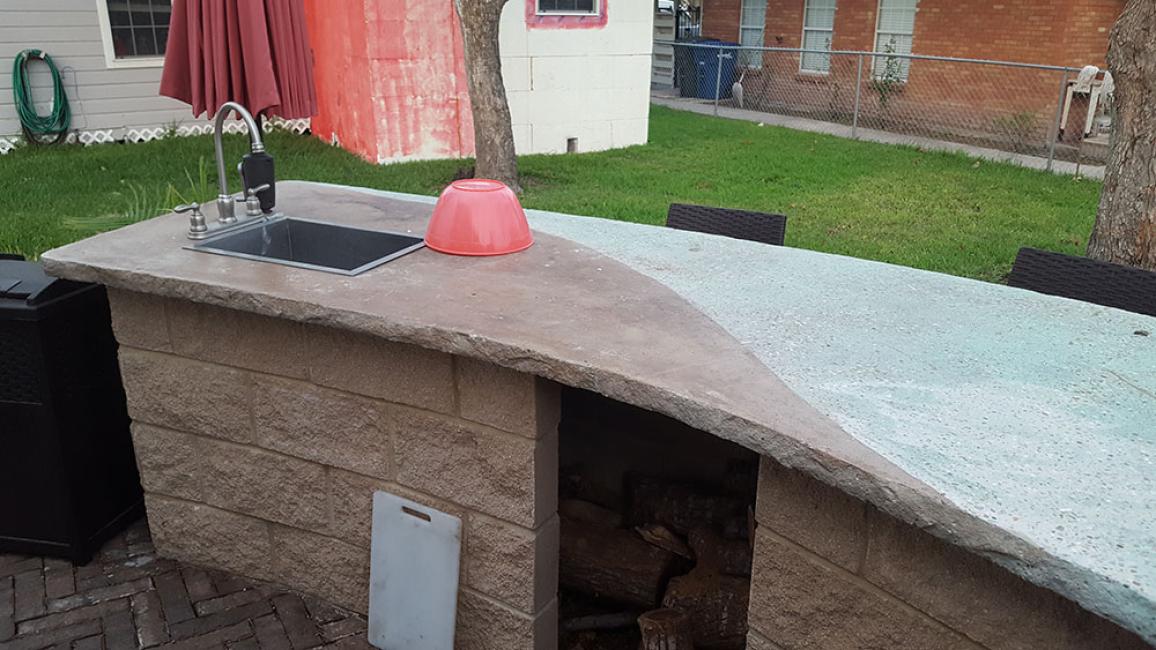
Most outdoor kitchens we see around Corpus Christi have granite on top. It's what a lot of people picture when they think of an outdoor counter. Lately, though, more homeowners are asking us about concrete, usually because they want a counter that's poured to fit their kitchen rather than cut down from a slab.
We build concrete countertops for outdoor kitchens around Corpus Christi, but we'll be upfront: concrete isn't the right call for everyone. Below is an honest look at how the two compare outside, including the downsides people usually bring up about concrete.
How Concrete and Granite Compare Outdoors
Look and Shape
With granite, you're choosing from slabs that already exist. You find one with a color and pattern you like, and the fabricator cuts it down to size. Concrete works the other way around. We build a form for your counter and pour it, which is why we can curve an edge, raise part of it into a bar top, or wrap it around a smoker.
Stains and Sealing
Granite wins this one. Concrete has more tiny pores in it, and once the sealer starts wearing down, grease and red wine will soak in quicker than they would on granite. Granite needs sealing too, but it won't hold it against you as much if you forget for a while.
So with concrete, you'll want to reseal when it's due and not leave spills sitting overnight. Ask whoever installs it how often that should be, since it changes with the sealer and how much sun the counter gets. For general upkeep, see our weatherproofing tips.
Heat and Sun
A hot pan usually won't hurt either one, though a trivet never hurts. The bigger difference shows up after a few hours in the sun. A dark granite counter in August can get too hot to lean on. Concrete in a lighter color usually stays cooler, which is nice if there's no roof over your kitchen.
Where concrete can struggle is color. Some stains and pigments fade after years in direct sun, so ask what's being used and whether it's meant for outdoors.
Cracking
This is the question we get asked most. Yes, concrete can develop hairline cracks. How it's built makes a big difference, which is why reinforcement and control joints matter so much. Granite is less likely to crack, but the edges can chip if something heavy hits them.
Weight
A concrete counter weighs more than a granite one the same size. On a brick or block kitchen base that's not really an issue, since the base is built for it. It matters more if the counter is going on a lighter metal or wood frame.
Cost
It's hard to give a number without seeing the kitchen. For concrete, the price mostly comes down to how big and complicated the counter is and whether you add extras like a built-in sink. If all you need is a straight counter, granite from a standard slab is often cheaper. Concrete starts to make more sense when the shape is something a slab can't do.
When Granite Might Be the Better Fit
If you want a counter you can mostly forget about, granite is hard to argue with. It's also a good fit for a simple straight run where a standard slab works fine, and you like the look of natural stone. And if you know sealing is something you'll put off, granite will put up with that better than concrete will.
Where Concrete Comes Out Ahead
Concrete really earns its place when the kitchen isn't a simple rectangle. We can pour it around a custom smoker or built-in grill, add a bar ledge at a different height, or run one long counter across an L without a seam in the corner. A sink can even be cast right into the counter, so there's no gap between the two to clean around. You can see a few of these in our countertop gallery.
It also ties in well with the rest of a masonry kitchen. The color can be picked to go with the brick or stone base, so the counter looks like it was built with the kitchen rather than added at the end. And because it's formed to fit, you're not stuck working around the size of the slabs a fabricator has in stock.
If you're still planning the overall shape of your kitchen, our guide to outdoor kitchen layouts shows where a custom counter can make a difference.
What to Think About in the Coastal Bend
Outdoor counters here deal with strong sun, humidity, blowing rain, and salt air closer to the bay and Gulf. Neither material is immune to that. Whichever one you pick, a covered cooking area or a pergola will cut down on sun exposure and help the finish last longer.
With concrete, the sealer does a lot of the work, so staying on top of resealing matters more near the water. It's also worth rinsing salt spray and grime off every so often instead of letting it build up. The same goes for granite, just on a slower schedule.
Frequently Asked Questions
Do concrete countertops crack outside?
They can develop small hairline cracks over time. Good reinforcement, the right thickness, and control joints go a long way toward preventing larger ones. Hairline cracks are usually cosmetic and don't affect how the counter works.
How often do outdoor concrete countertops need to be sealed?
It depends on the sealer and how much sun and rain the counter gets. Uncovered counters generally need it more often than covered ones. Your installer should give you a schedule for the specific product used.
Does concrete get as hot as granite in the sun?
Usually not. Concrete, especially in a lighter color, tends to stay cooler to the touch than dark granite. Color and shade make a big difference with either one.
Will the color of a concrete countertop fade?
Some pigments can fade with years of direct sun. Using outdoor-rated pigments and sealers, and adding some shade, helps the color hold up.
Not Sure Which One Fits Your Kitchen?
There's no wrong answer here. Granite is lower maintenance, and concrete gives you more say in the shape and look. It mostly comes down to your layout and how much upkeep you're comfortable with.
Coastal Masonry builds outdoor kitchens and custom concrete countertops across Corpus Christi and the Coastal Bend. Get in touch, and we'll talk through what would work best for your patio.