
How to Plan a Built-In Smoker for Your Outdoor Kitchen
A built-in smoker takes more planning than a grill. Here's what to think through before the masonry goes up, from the kind of smoker you want to where the smoke will end up.
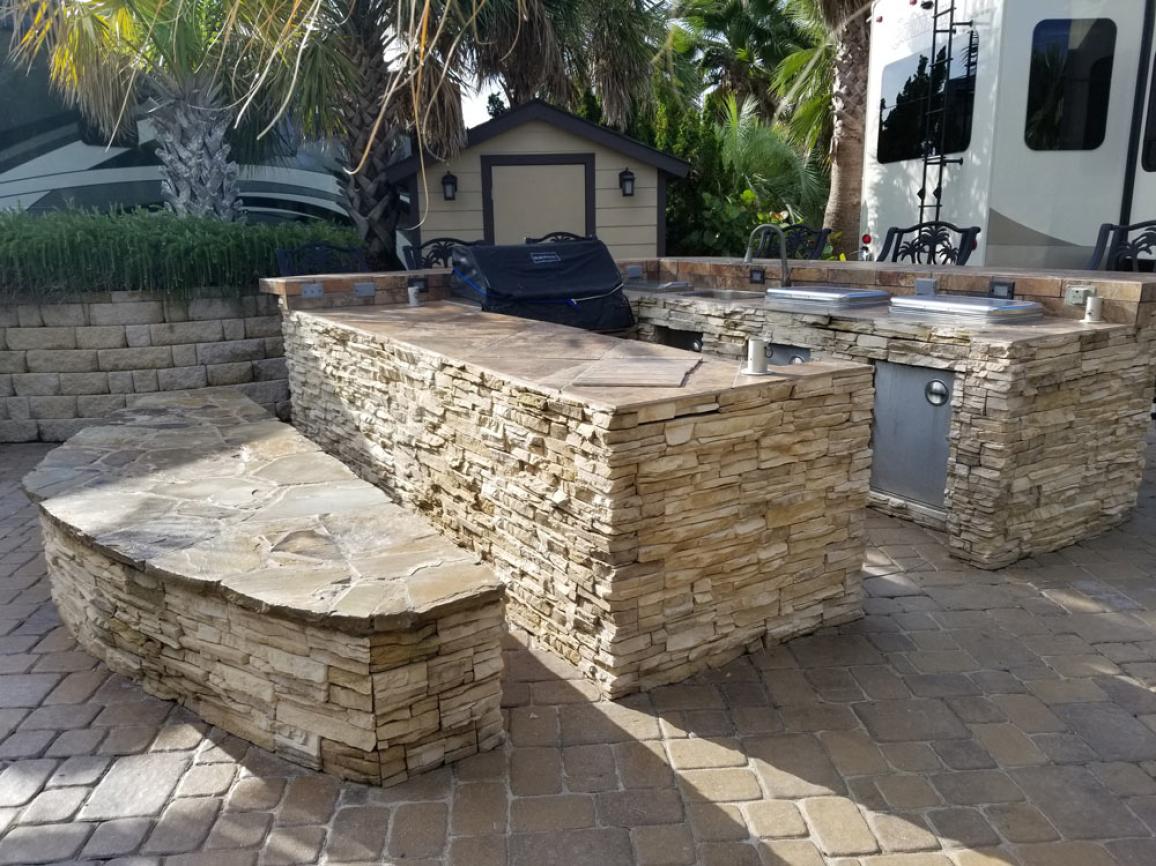
When we sit down with homeowners to plan an outdoor kitchen, the smoker is usually the piece we talk about first. The firebox, chimney, and wood storage all have to be built into the brick or stone, and where you put the smoker decides where the smoke ends up on a long cook. Changing any of that after the masonry is finished is a lot of work.
Coastal Masonry builds custom brick and stone smokers for homeowners around Corpus Christi and the Coastal Bend. Here's what we'd walk you through before the first block goes down.
Start With How Much You Cook
We usually start by asking what you cook and how many people you're feeding. A family that mostly does ribs and sausage on Saturdays doesn't need a huge pit. A smaller one gets hot faster, and you won't go through as much wood. If you're the one smoking two briskets for every birthday party, that's different. You'll want a bigger chamber and a firebox that can hold heat all day.
How often you'll use it matters too. If you're out there every weekend, it's worth giving the smoker more room in the kitchen.
Decide How Hands-On You Want to Be
The type of smoker you choose mostly comes down to how much you like tending a fire. A brick offset, with the firebox on one end and the cook chamber on the other, is the classic Texas setup. It rewards people who enjoy adding splits and adjusting dampers throughout the day.
A vertical or cabinet-style smoker stacks the racks above the heat. It takes up less counter length, which can help on a smaller patio, and many people find it easier to keep steady.
Some homeowners would rather not manage a wood fire at all. In that case, we can build the masonry around a pellet smoker, kamado, or other manufactured unit so it looks built-in while the unit handles the temperature. If that's your plan, choose the exact model before construction starts. Every unit has its own dimensions, clearance, and venting requirements, and the opening has to be built to match.
Figure Out Where the Smoke Will Go
A grill puts out smoke for half an hour. A smoker can run from early morning until dinner. Before settling on a spot, notice which way the wind usually blows across your yard. Around Corpus Christi, it often comes off the water from the southeast, but houses, fences, and trees can change how it moves through your yard. The goal is to keep the smoke away from open windows, the back door, and wherever people will be sitting.
You also want it close enough to the back door that you're not hauling a hot brisket across the yard, but not so close that the house smells like smoke for two days. We like putting the smoker at one end of the counter instead of in the middle. That way the smoke has open air on one side instead of drifting over the rest of the kitchen. Our post on outdoor kitchen layouts shows how that works with different shapes.
A smoker under a roof or pergola is doable, but it has to be planned that way from day one. The chimney needs to go up past the cover so the smoke gets out, and the cover needs to sit high enough over the cooking area that heat isn't trapped underneath. Trying to fix either one after the roof is built is a headache.
What Goes Into a Masonry Smoker
From the outside, a brick or stone smoker looks like the rest of the kitchen. Inside, the parts that get hottest are lined with firebrick, which is made to handle direct heat without cracking. Regular brick or stone is used on the outside, where it's there for looks and structure. That combination is a big part of why a masonry smoker holds temperature so well once it's up to heat.
Airflow is the other half. An intake damper near the fire and a flue or chimney on the far end control how much air feeds the fire and how fast smoke moves across the meat. Where those openings go has a lot to do with how evenly the smoker cooks, so they're planned along with the size of the firebox and chamber.
A few smaller details make a smoker easier to live with:
- A way for rainwater to drain out of the firebox, so it isn't sitting in a puddle after a storm
- Doors and grates sized for the trays and cuts you actually cook
- Easy access for scooping out ash
- A thermometer port you can read it without opening the door
On the masonry side, the base needs to be solid, since a brick smoker is heavy. If it's going on an existing patio, we'll check whether the slab can carry it.
Leave Room to Work Around It
People tend to plan the smoker and forget the space next to it. When you pull a brisket off at hour twelve, you need a counter right there to set the tray down, wrap it, or let it rest. A stretch of counter beside the smoker door does more work than almost anything else in the kitchen. Concrete countertops can be poured to fit that spot exactly.
You'll also need somewhere to store your wood. We often build an open bay right under the smoker or at the end of the counter, so the splits stay dry and you're not walking to the shed every time the fire gets low. It's humid here, so we leave that space open enough for air to move through. Gloves, foil, and probes can go in cabinets and drawers close by.
Pairing a Smoker With Other Features
A lot of the kitchens we build have a smoker and a grill side by side, so you can sear or cook sides while the meat smokes. Our built-in grills and smokers page shows how those combinations come together. If you're also thinking about an outdoor fireplace or pizza oven, keep each fire feature far enough apart that the cook isn't standing between two heat sources, and make sure the smoke from each has somewhere to go.
For help choosing the other pieces of the kitchen, see key features every outdoor kitchen needs.
Planning for Coastal Weather
The masonry itself handles sun and rain well. The metal parts are what take a beating, especially closer to the bay or Gulf. Firebox doors, hinges, grates, and dampers can rust quickly in salt air, so it's worth asking about stainless or heavier-gauge hardware if you live near the water. Wiping them down after a cook and keeping them dry between uses helps a lot.
If the smoker isn't under a roof, a fitted cover will keep rain out of the chamber, but only put it on once everything has cooled completely. Our weatherproofing tips for outdoor kitchens go into more detail on protecting the rest of the space.
Before the First Cook
It's tempting to load up a brisket the day the masonry is finished, but fresh mortar needs time to cure. The first few fires should also be small, so moisture can work its way out of the brick slowly instead of all at once. Your builder should give you a timeline for when it's ready and how to bring it up to full heat the first time.
Frequently Asked Questions
Is a brick smoker better than a steel one?
They cook differently. Brick takes longer to come up to temperature, but once it's there it holds heat steadily and isn't thrown off as much by wind or a cool evening. Steel heats faster and can be moved, but it loses heat quicker and tends to rust faster on the coast.
Can a smoker go under a covered patio?
Often, yes, as long as it's planned that way. The flue has to vent smoke well beyond the cover, and there needs to be enough clearance overhead for heat. A smoker should never be added under a roof that wasn't designed for one.
Should I burn wood or charcoal?
A masonry offset is usually built around wood, often with charcoal to get the fire going. If you'd rather not manage a wood fire, a built-in pellet or charcoal unit may suit you better. Decide before the build, since it affects the size and design of the firebox.
How much space does a built-in smoker take up?
Mostly it comes down to the kind of smoker. An upright smoker can fit in a pretty tight spot. An offset runs longer, since the firebox sits off to the side of the cook chamber. Either way, plan for the counter next to it and a place for wood, because that adds more room than most people expect.
Let's Talk Through Your Smoker
A good smoker really starts on paper. Once you know what you want to cook on it and where it's going in the yard, building it is the easy part.
If you're planning a smoker on its own or as part of a full outdoor kitchen, reach out to Coastal Masonry. We'll look at your yard and help you sort out what will work. You can also browse our outdoor kitchen gallery for ideas.
